
Responsibility
Put things in perspective, step back and observe the impact of the event on our thoughts, emotions and sensations.
- Step back
- Be aware of your subjectivity
- Feel like a stakeholder
- Take your power to act
The R.E.A.L. Profile assesses 24 adaptivity skills and gives every person and every team a concrete method to make progress.

* Lightspeed Research study, Nov. 2017, 10 European countries.
REALSWITCH teaches you to notice stress in a few seconds, several times a day, and to take back control.
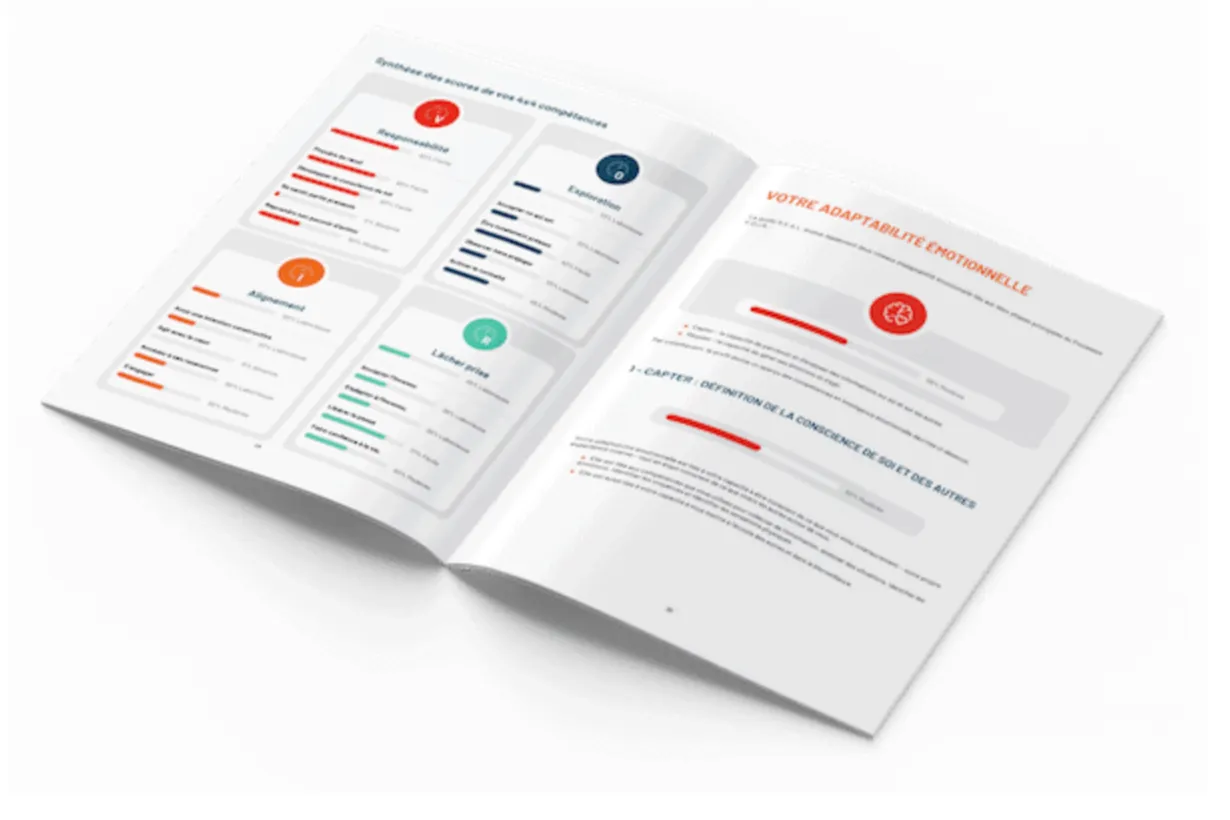
Faced with the unknown, there are two responses: resist to preserve what exists, or open up to change with a constructive mindset. The R.E.A.L. Profile measures your ability to switch from the automatic, reactive mental mode to the adaptive mode whenever a situation calls for it.
Put things in perspective, step back and observe the impact of the event on our thoughts, emotions and sensations.
Accept that things happen the way they happen. Accepting makes action possible; it is the opposite of resignation.
Go through what is happening with the will to build, to contribute and to help others grow.
See the unknown as a source of opportunities and free yourself from any defensive posture, from fear and from stress.
Consciously or intuitively choose a thinking process that makes it easier to switch to the adaptive brain.
Awareness of yourself and others, and the quality of the actions you take to regulate your emotions.
Avoid the “trap behaviours” of each D.i.S.C.® profile
Avoid automatic reactions and take the time to step away from a situation before looking for a solution.
The report identifies the skills to strengthen and suggests simple practices drawn from the Neurosensory Approach to develop prefrontal adaptivity day to day.
Download a sample report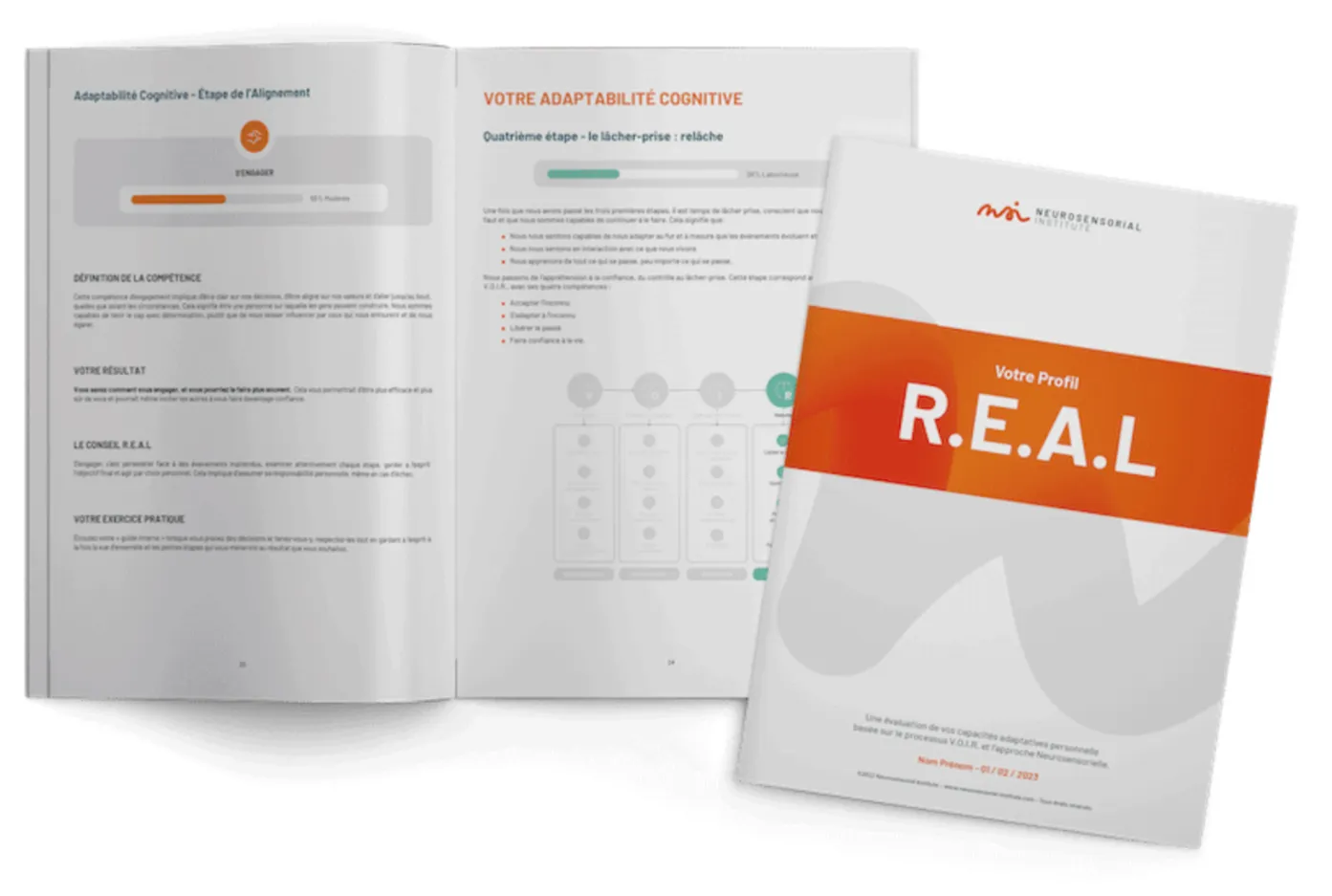

“A tool that stands apart from ‘snapshot’ tests and offers a real possibility of practical growth. The questionnaire is simple and concrete.”
Once certified, you receive our materials to debrief the individual profile and the Team Profile, in workshops or in coaching.